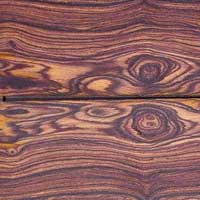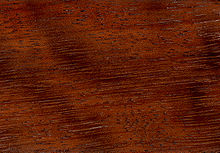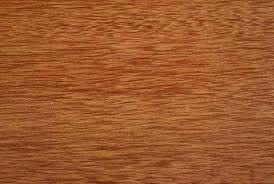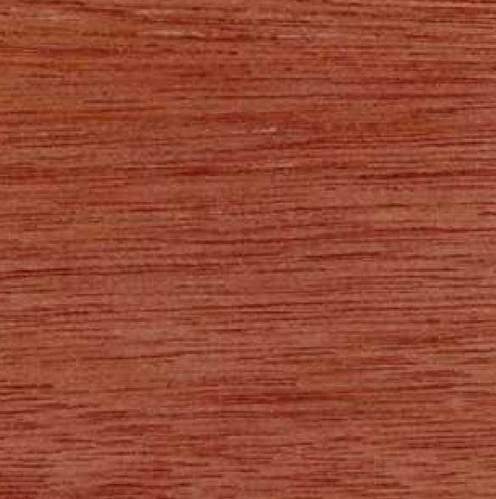
Wedge wood is an exotic lumber species that is harvested from the Central and West African tree called Millettia Laurentii.Wenge is very visually striking in it’s chocolatey brown coloring. It also provides great contrast when constructed along with lighter and contrasting woods. Wenge is extremely popular for Flooring, Furniture, Cabinets, and Millwork. The reason for the popularity is because of it’s combination of durability, coloring, and available textures depending on how it is sawn. It is a great wood to have as part of any design.
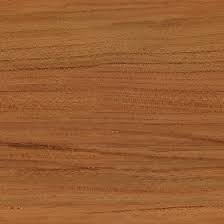
Teak wood is a dense, close-grained type of hardwood that is sourced from the Tectona grandis tree, native to south and southeast Asia. Teak is originally golden in colour and has a smooth grain and texture. It’s high in natural oils and rubber, meaning it’s strong, durable, and virtually impervious to extreme weather conditions and rotting, even if left untreated.
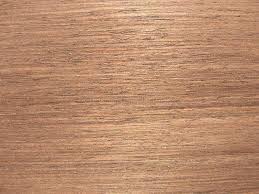
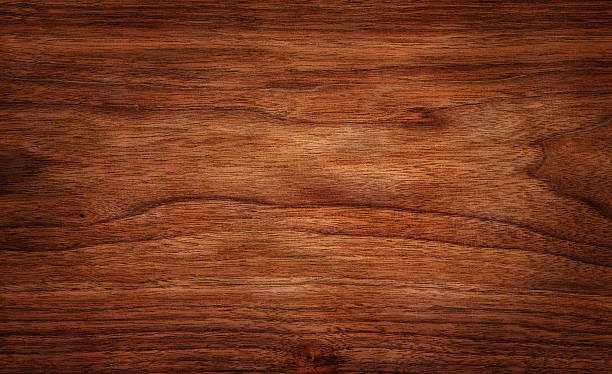
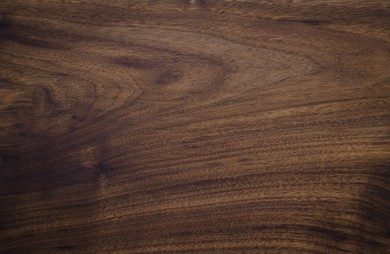
Walnut wood is hard, heavy, and resilient, capable of resisting warping and suffering very little shrinkage. Walnut wood is lumber cut from the trees of the Juglans genus. This wood has been popular in the creation of furniture for its strength, coloring and its ability to be shaped into elaborate cu
African padauk has a very unique reddish orange coloration, and the wood is sometimes referred to by the name Vermillion. Unfortunately, this dramatic color is inevitably darkened to a deep reddish brown color. UV-inhibiting finishes may prolong, but not prevent the gradual color-shift of this brightly colored wood.
Padauk is moderately heavy, strong, and stiff, with exceptional stability. It’s a popular hardwood among hobbyist woodworkers because of its unique color and low cost.
Apitong gurjan is widely scattered throughout the Indo‐Malayan region. More than 70 sub species are in this group and occur in a wide range of soil and climatic conditions from lowland forests to 4300ft above sea level. Trees are medium to large usually with cylindrical boles that can be up to 100ft long.
Heartwood varies from light to dark red brown or brown to dark brown with a purplish tinge. Sapwood is well defined and grey-brown in colour. Surface dull and often tacky. Grain almost straight. Texture moderately coarse and even, has faint resinous odour.
Arau wood is procured from Malaysia. The texture, weight, and color is similar to the Champ wood found in the north eastern region of India. It is suitable as a general utility timber. It has also been used as posts, joists, rafters, flooring, furniture and household implements
Ash European or European Ash grows extensively through Europe and surrounding countries. It is a dense hardwood that has many uses ranging from cabinetry, handles, bows, and boxes, to other articles. Trees commonly grow from 40 feet up to a maximum of 140 feet tall. Diameters of 2-4 feet are common with some up to 6.5 feet in diameter. The wood is coarse with open grain. Ash yields good results with machine or hand tools. It glues and finishes well.
Balau is a very dense tightly grained wood that is heavily laden with rich tropical oils and resins. Balau’s texture is very fine and even. For centuries Balau has been used for shipbuilding, heavy-duty furniture, and heavy construction, coveted for it’s excellent strength and weather resistant qualities. Balau is also a responsibly managed species and although it’s mechanical properties are superior, Balau has not experienced the overpricing that Tectona has.
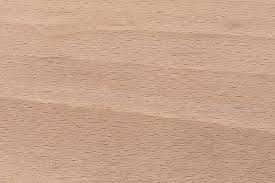
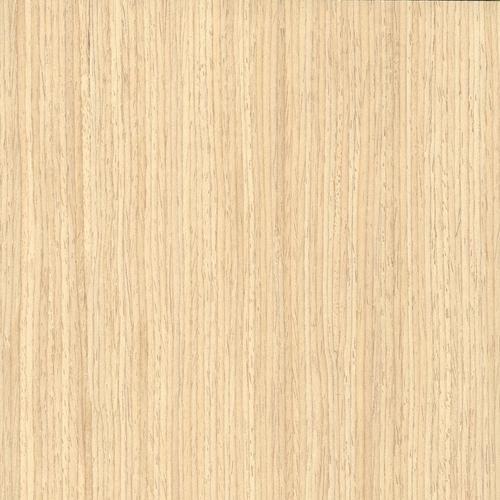
European Beech is typically a pale cream color, sometimes with a pink or brown hue. Veneer tends to be slightly darker colored, as slicing the veneer usually requires the wood to be prepared with steam, which gives the wood a more golden tone. Flatsawn surfaces tend to be very plain, while quartersawn surfaces exhibit a silvery fleck pattern. Beech is considered non-durable or perishable. It is also susceptible to insect attack. European Beech is widely available across Europe, and it very economically priced within its natural range.
Cherry European or European Cherry wood – The heartwood is a rich red-brown initially, but it ages to a darker colour, losing some of the red tint. It is generally straight-grained, with a fairly fine and even texture. The sapwood is clearly differentiated from the heartwood, and is paler. European Cherry is a versatile timber – you can use our interactive system for typical uses for European Cherry. European Cherry can be used for cabinetmaking, furniture, turnery and much more. If currently available (from sustainable and legal sources) you can use our system to be connected with suppliers of European Cherry.
Iroko wood of the iroko tree (Chlorophora excelsa), native to the west coast of Africa. It is sometimes called African, or Nigerian, teak, but the iroko is unrelated to the teak family. The wood is tough, dense, and very durable. It is often used in cabinetmaking and paneling as a substitute for teak, which it resembles both in colour (light brown to deep golden-brown) and in grain.
Kapur is very durable to durable to fungi and is durable to dry wood borers. The wood varies from red brown to pink brown. Timber has a very strong aroma of camphor while sawing. Presence of thin resin veins. It has clearly demarcated sapwood. The grain is straight or interlocked and the texture is medium. Heartwood is dark pink to reddish brown. Sapwood is well defined and yellowish brown in color. Grain is straight or slightly interlocked. Texture is coarse to even.
Dark red meranti is a characterization term based on wood properties like colour, hardness, thickness and weight. It is found in the Philippines, Indonesia, and Malaysia. It is a very popular wood among architects and designers because if its high luster and good machining properties. In Europe, DRM has long been used for the production of sophisticated joinery products, such as doors, window frames, and doors. DRM sports a great mixture of yellow, white, and red tones creating a very warming combination of colors.
Merbau wood is mainly originated from Southeast Asia, such as Indonesia, Malaysia, Phipines & Papua New Guinea. Merbau wood is also planted in Africa. Merbau parquet wood is very hard even in the range of hardwood species, with its Janka rating hardness about 1850 Ps, 80% higher than teak wood & black walnut wood. Therefore, merbau wood, or merbau hardwood, is very suitable for hardwood flooring, hardwood cladding & hardwood furniture.
Merbau wood is mainly originated from Southeast Asia, such as Indonesia, Malaysia, Phipines & Papua New Guinea. Merbau wood is also planted in Africa. Merbau parquet wood is very hard even in the range of hardwood species, with its Janka rating hardness about 1850 Ps, 80% higher than teak wood & black walnut wood. Therefore, merbau wood, or merbau hardwood, is very suitable for hardwood flooring, hardwood cladding & hardwood furniture
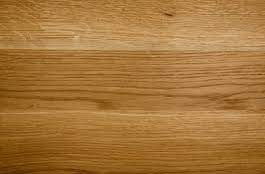
Oak wood is a type of hardwood that derives from the oak tree native to the northern hemisphere. There are around 600 species of oak, both deciduous and evergreen. North America has the most, with around 90 species being found there. Oak wood has been used as a hardwood timber for thousands of years, yet it takes up to 150 years before the wood from an oak tree can be used for construction. Modern uses for oak wood include homewares, flooring, wine barrels and firewood.
White oak is a hard and heavy wood with a medium-bending and crushing strength, low in stiffness, but very good in steam-bending. White oaks (Quercus genus) are a plentiful hardwood in our Eastern and Southern forests. White oak tends to be a light beige through brown, while red oak has pinkish and reddish hues instead.
Pyinkado an exotic hard wood species in the sal forests of Bangladesh, India. A small plantation of Pyinkado was raised in a sal, Shorea robusta forest of Bangladesh. About 78 percent stems were found to have survived. The rate of growth was much faster than that of the copies of Sal. A large scale plantation of Pyinkado on 10 to 15 years rotation would yield a good number of excellent stems to meet the demand of electric posts for rural electrification of Bangladesh in future.
Sapele is technically a hardwood or a deciduous tree. It is a hard, medium-density wood that has great durability. It can be used for both indoor and outdoor applications. Sapele, also called sapele mahogany or scented mahogany, grows in large sections of western and central Africa, from Sierra Leone to Uganda and south to Angola. Sapele is one of the large canopy trees in the equatorial West African forest. The reddish-brown heartwood resembles African mahogany and the sapwood is a white to pale yellow.